
‹
›
‹
›
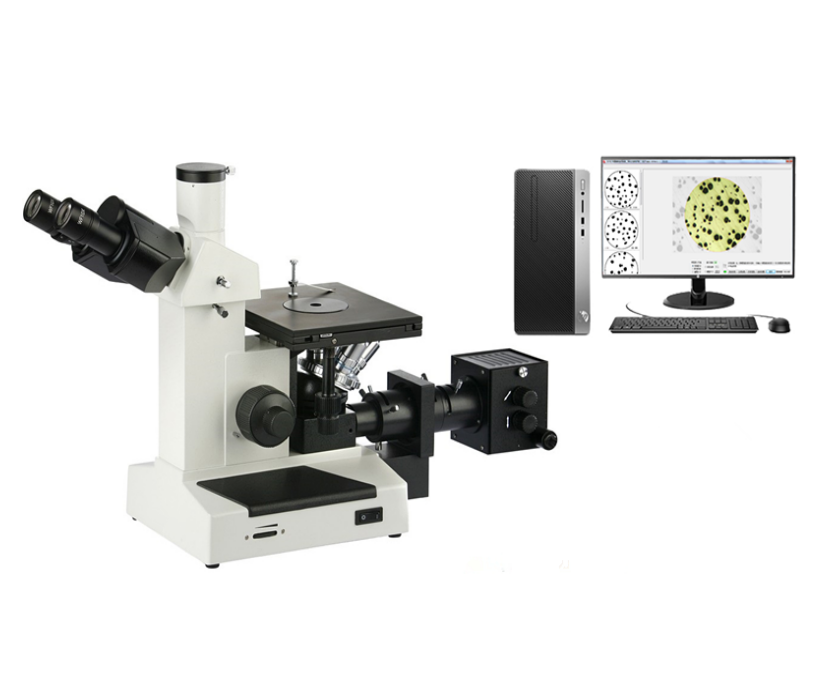
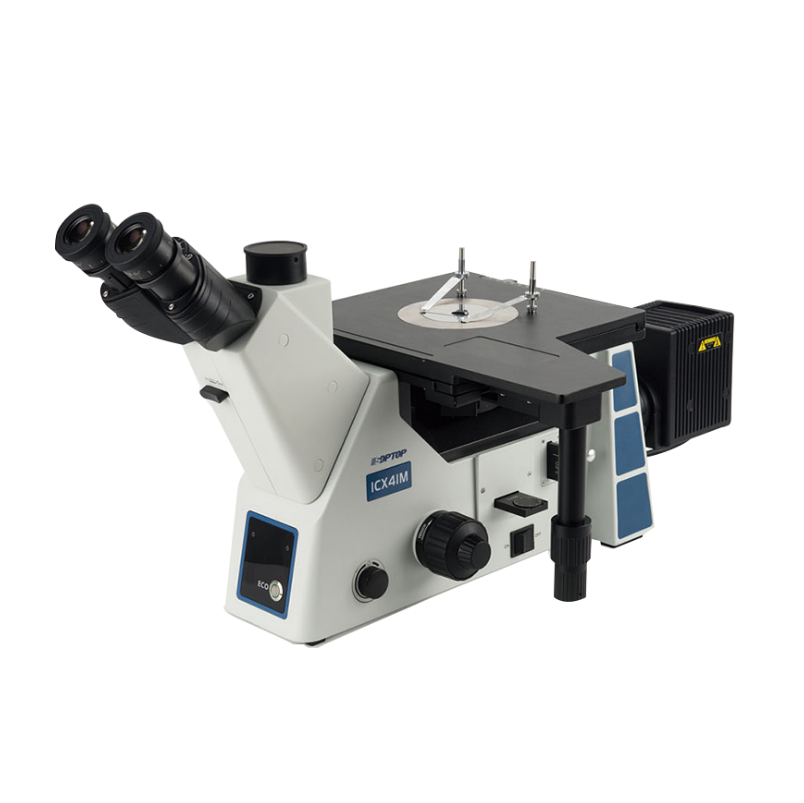
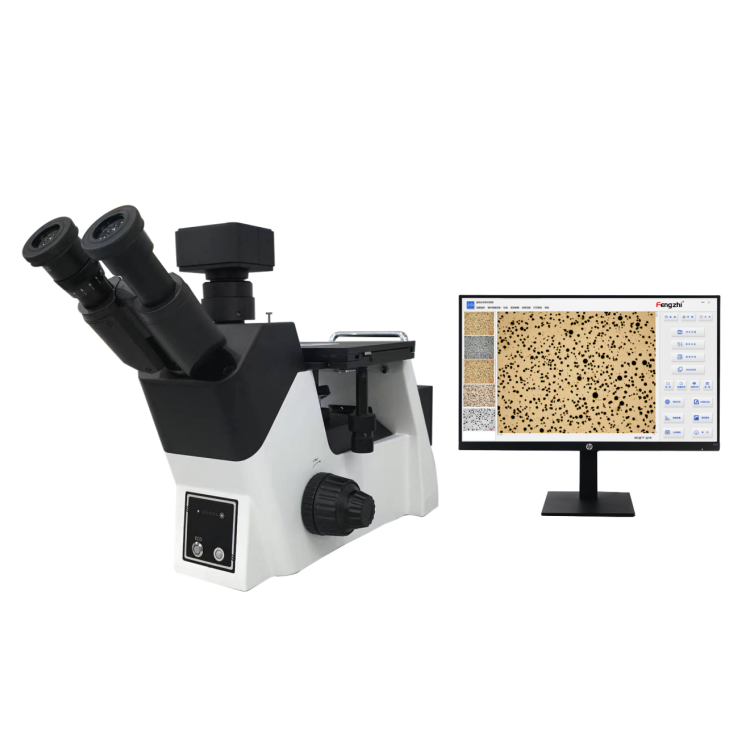
4XC-W Computerized Metallographic Microscope
4XC-W computerized metallographic microscope introduction:
The 4XC-W computerized metallographic microscope is a three lens inverted metallographic microscope, equipped with excellent long focal length flat field achromatic objective and large field flat field eyepiece. The illumination system adopts Kohler illumination method, and the field of view illumination is uniform. The product has a compact structure and is easy to operate and comfortable. Suitable for microscopic observation of metallographic structure and surface morphology, it is an ideal instrument for research in metallurgy, mineralogy, and precision engineering.
Observation system
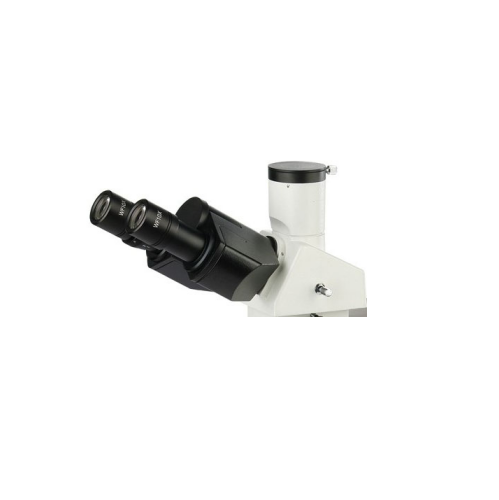
Hinged observation tube: binocular observation tube, single view adjustable, mirror tube tilted at 30 °, comfortable and beautiful. A three eye observation tube that can be connected to a camera device. Eyepiece: WF10X large field flat field eyepiece, with a field of view range of 18mm, providing a wide and flat observation space.
Mechanical loading platform
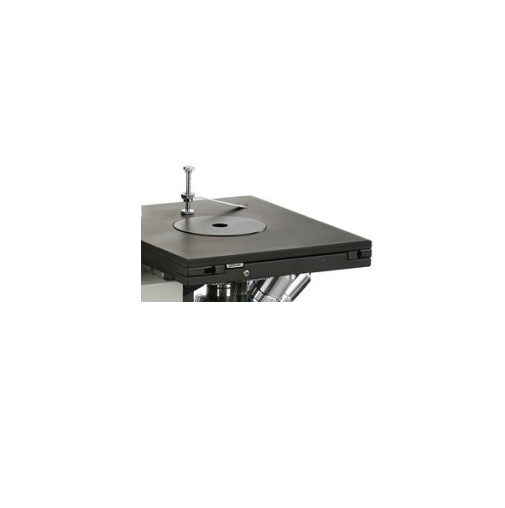
Mechanical mobile loading platform with built-in rotatable circular loading platform, which rotates during polarization observation to meet the requirements of polarization mirror inspection.
Lighting system
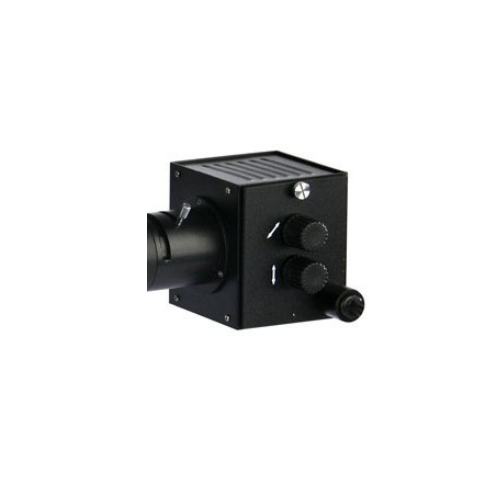
Using the Kolar lighting method, the aperture aperture and field of view aperture can be adjusted smoothly and comfortably through a dial. The optional polarizer can adjust the polarization angle by 90 ° to observe microscopic images under different polarization states.
4XC-W computerized metallographic microscope configuration table:
(Note: "·" is a standard configuration; "O" is an optional component)
FMIA2023New version of metallographic image analysis software
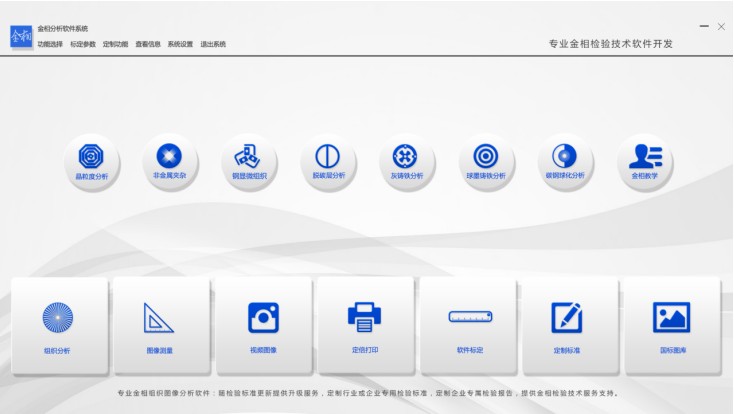
Overview:
The FMIA2023 version metallographic image analysis software system is developed by our company in combination with the current needs of casting enterprises, automotive parts enterprises, heat treatment enterprises, bearing steel industry, power system industry, railway parts industry, and various related testing companies for metallographic testing, to improve product qualification rates and assist in the improvement of laboratory inspection levels. We have collected the opinions of experts and teachers from various industries to develop this FMIA2023 version metallographic image analysis software system.
The software system national standard library contains 150 categories and approximately 700 commonly used submodules, basically covering common metallographic standards and meeting the requirements of metallographic analysis and inspection in the vast majority of units. Specify open related categories according to the needs of different industries and meet industry testing requirements. Lifetime free access to all modules, lifetime free upgrade standard.
Given the continuous increase in new materials and imported grade materials, materials and evaluation standards that have not yet been entered into the software can be customized and entered.
Characteristics:
Software installation is more intuitive and concise
A brand new software installation, registration, and calibration boot mode, simple and clear, can be completed through default prompts.
Genuine software assurance system
After the software installation is completed, the first step is to activate the genuine software, followed by registering the computer hardware ID to ensure the legitimate rights and interests of the customer.
Customizable requirement standards
In addition to standard testing modules, customized testing modules can be customized according to customer needs, such as enterprise standards, special industry standards, etc.
7 major inspection categories for quick entry
Statistical production of 7 categories for quick entry: grain size, non-metallic inclusions, microstructure of steel, decarburization layer analysis, gray iron, ductile iron, carbon steel spheroidization, etc., plus a metallographic teaching.
The report template can be modified
Can customize report templates for different enterprises.
Genuine software can be upgraded
According to the implementation time of the National Standardization Committee standards, software upgrades will be provided for free.
Widely applicable to computer systems
This software can be installed and run on Windows 7 and Windows 10.
Latest metallographic software standards: -- Partial excerpts
GB/T 6394-2017 Grain Size Measurement and Rating (Grain Boundary Extraction, Grain Boundary Reconstruction, Single Phase, Dual Phase, Grain Size Measurement, Rating)
GB/T 10561-2005/ISO 4967-1998 Determination of non-metallic inclusion content in steel
GB/T 7216-2009 Gray Cast Iron: Graphite Distribution Shape, Graphite Length, Pearlite Quantity, Carbide Quantity, etc
GB/T 9441-2009 ductile iron: spheroidization rate, graphite size, number of pearlite, number of carbides, etc
GB/T 26656-2011 Vermicular Graphite Cast Iron: Graphite morphology, creep rate, number of pearlite, number of phosphorus eutectic, number of carbides, etc
GB/T 18254-2016 Metallographic Examination of High Carbon Chromium Bearing Steel
GB/T 34891-2017 Rolling Bearings-Heat Treatment Technical Conditions for High Carbon Chromium Bearing Steel Parts
GB/T 1499.2-2018 Steel for reinforced concrete Part 2: Hot rolled ribbed steel bars
GB/T 1299-2014 Mold Steel
GB/T 3246.1-2012 Wrought aluminum and aluminum alloy products - Methods for microstructure inspection - Part 1: Methods for microstructure inspection
GB/T 13925-2010 Cast High Manganese Steel: Grade of Undissolved Carbides, Grade of Precipitated Carbides, Grade of Superheated Carbides
JB/T 7946-2017 Metallography of Cast Aluminum Alloy
JB/T 1255-2014 Technical Conditions for Heat Treatment of High Carbon Chromium Bearing Steel Parts for Rolling Bearings
JB/T 9986-2013 Metallographic Inspection of Tool Heat Treatment
QC/T 262-1999 Metallographic Inspection of Automotive Carburized Gears: Martensite Needle Length, Carbides, Austenite Rating, Austenite Content
QC/T 502-1999 Metallographic Inspection of Automotive Induction Quenched Parts
QC/T 553-2008 Metallographic Inspection of Cast Aluminum Pistons for Automotive Engines
TB/T2942.2-2018 Cast Steel Parts for Locomotives and Rolling Stock Part 2: Metallographic Structure Inspection Atlas.
TB/T 2478-1993 Metallographic Structure Rating Chart for Spring Bars
TB/T 2451-1993 Metallographic examination of non-metallic inclusions in cast steel
TB/T 2944-1999 Carbon Steel Forgings for Railway Use
DL/T 773-2016 Spheroidization Rating Standard for 12Cr1MoV Steel Used in Thermal Power Plants -- Characteristics of Ferrite and Pearlite Spheroidization Structure
DL/T 773-2016 Spheroidization Rating Standard for 12Cr1MoV Steel Used in Thermal Power Plants -- Characteristics of Ferrite and Bainite or Bainite Spheroidized Structure
DL/T 1422-2015 18Cr-8Ni series austenitic stainless steel boiler tube microstructure aging rating standard
ISO 4499-2016 Hardmetals - Metallographic determination of microstructure
ASTM A262-2015 Test Procedure for Susceptibility to Intergranular Corrosion of Austenitic Stainless Steel
ASTM E45-2013 Evaluation Method for Inclusion Content in Steel
The national standard library contains 150 categories and approximately 700 commonly used submodules, basically covering common metallographic standards and meeting the requirements of metallographic analysis and inspection in the vast majority of units; The software randomly releases about 120 commonly used submodules, while the rest are lifetime free upgrade calls.
Basic function:
1. Organizational analysis
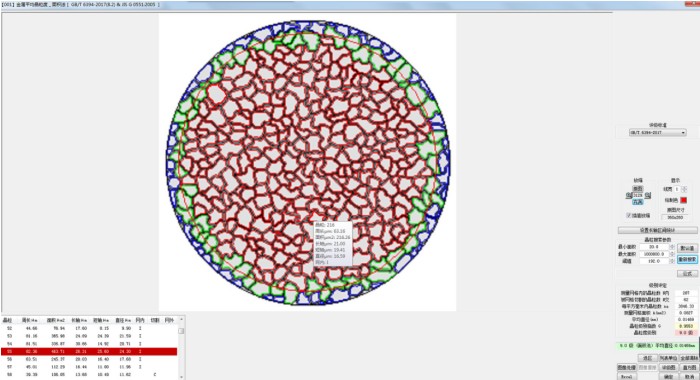
The execution standard for selecting materials correctly is to capture and take photos of the metallographic structure of the sample through the camera system of the metallographic microscope, and enter the evaluation level interface:
(1) Automatic rating: In the metallographic standard, there are quantitative standards (such as calculation formulas, percentage ranges, etc.), and the software automatically rates them to provide metallographic levels and generate metallographic detection reports.
(2) Comparative rating: The software can also compare the samples and graphs in the graph library to manually determine the level.
(3) Multi module rating: can simultaneously count multiple modules
2. Image measurement
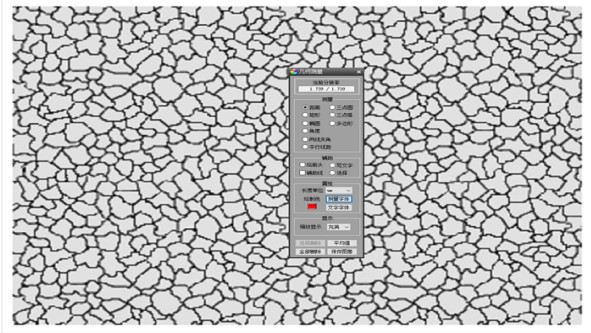
The software provides various measurement tools such as distance, rectangle, circle, polygon, line length, angle, line angle, radian, and point to center measurement to meet the basic geometric measurement functions of users and obtain relevant measurement data.
(1) Data export: The measured data can be generated into a dedicated graphic and textual measurement report, or directly imported into Excel.
(2) Save Image: The measured data can be automatically fused with the image, providing a clear and intuitive display of the accuracy of the measured area.
3. Gallery
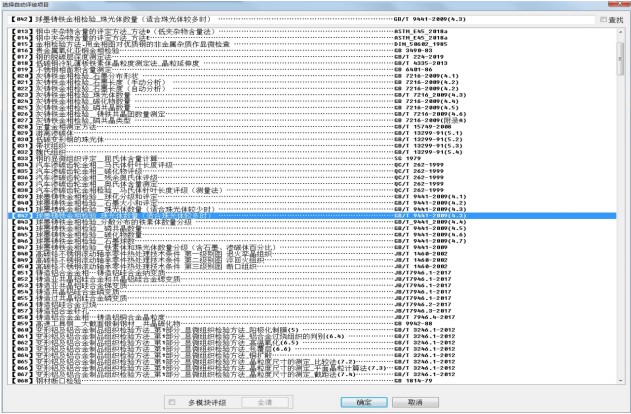
The software provides the function of viewing image libraries and provides users with the latest national standard level image libraries.
4. Fixed scale printing
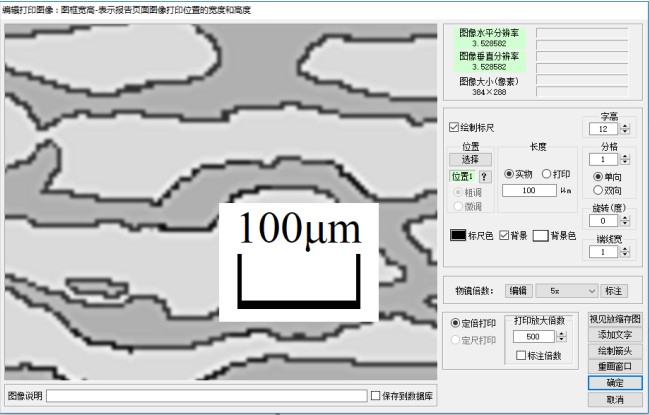
The software provides a fixed magnification printing function, allowing users to achieve fixed magnification printing of images based on actual printing requirements.
5. Inspection report
FMIA2023 version composition of metallographic analysis software system:
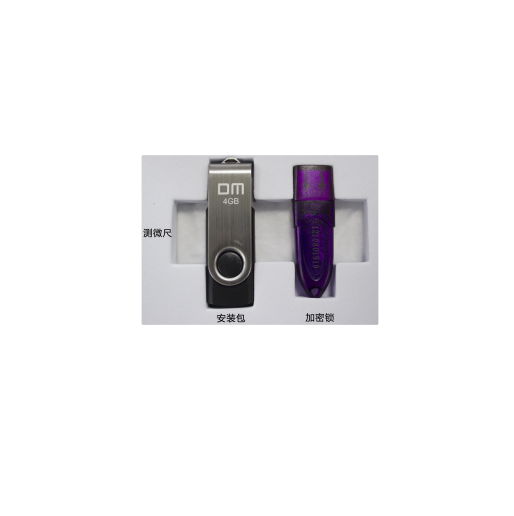
1.Software program FMIA2023 (USB flash drive);
2. Encryption lock: USB type+dynamic code verification;
3.Text materials: User Manual (on USB drive);
4. Micrometer scale: grid value 0.01mm.
4XC-W dimension:
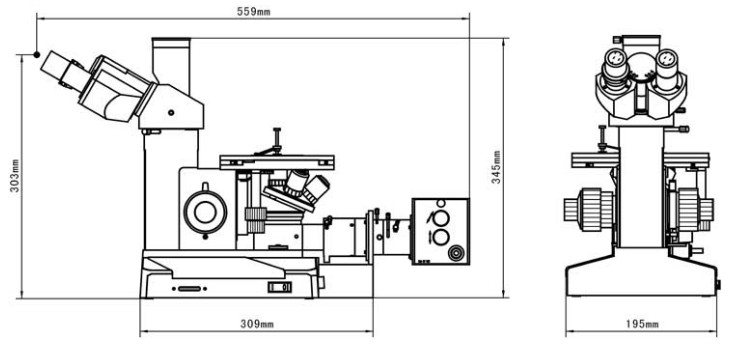
If you are interested in our products, please fill in the message below to contact us and get a quote!
We will get back to you as soon as possible!
Type What You are Looking for